

History
Formation
The mid-sixties were awash with kids playing football, generally in the street, parks and anywhere else but especially against a wall or garage door. Schools were very competitive in these times and games against other schools were fiercely fought and created a lot of interest. This competitiveness often went back generations and both father and son often shared a common interest in the outcome of their respective school games.
After leaving school many young lads clamoured to keep playing football, but many at fifteen years of age were unable to gain a place in teams in the local leagues because of age and inexperience. Stepping-up from schools to local league football was difficult for most and only a few had the necessary attributes to cope physically with this transition and it was for this very reason that Norton Albion came into being. Friends that often gathered on Norton Green and Show Field areas to play football were approaching leaving or had already left school and regularly spoke of playing together in a team. Some had signed junior forms for Billingham Synthonia, but had little or no chance of ever playing for the team.
In late 1964 four of these friends, Ged Flanagan, Alan Green, Rob Lake and Ged Waters met on a match day special bus to see Middlesbrough play at Ayresome Park. On the way to the game the idea of forming a team came up and it was agreed to meet the next day at the Red House School football pitch, formerly the Show Field to the rear of Norton Green to take things further. Overnight an unexpected four inches of snow fell, which could have scuppered our plans. The next day, even with the inclement weather, Alan and myself decided to turn up just in case and to our surprise so did Ged and Rob who appeared in the distance kicking a ball which was gathering snow as it rolled along. On reflection it was this get-together, in the snow on a school field without permission of the school that kick-started an adventure that was to last twenty-five years.
In the coming weeks, and that’s all it was, a team was assembled from friends and everyone had to provide their own kit, which was generally claret and sky blue. The claret and sky blue theme was influenced by West Ham’s success at that time and a lot of our friends already had this kit so it made sense to adopt these colours. Fixtures were then arranged by advertising in the national football magazine ‘Football Monthly’, which brought replies from miles around. Between 10 January 1965 and 15 May 1965 we managed to arrange a dozen fixtures and trips were made to Hartlepool, Easington, Aycliffe, Darlington as well as those around the Stockton area. Our early fixtures were all played away from home until we realised that we could use the facilities at Ropner Playing Fields, which were used by Richard Hind School and were nearly always left unattended at weekends. Although we did use these pitches we preferred to play at Norton where almost all the players lived. All the early games were arranged by post, which was reliable in those days and only on one occasion was there a mix-up with a fixture, due to an envelope being delivered to the wrong address. In the mid 1960’s hardly anybody had a telephone and contacting players for each game was by word of mouth. Generally this was done on Thursday evenings by bicycle about teatime to ensure that they were at home and to make sure they knew and understood the arrangements.
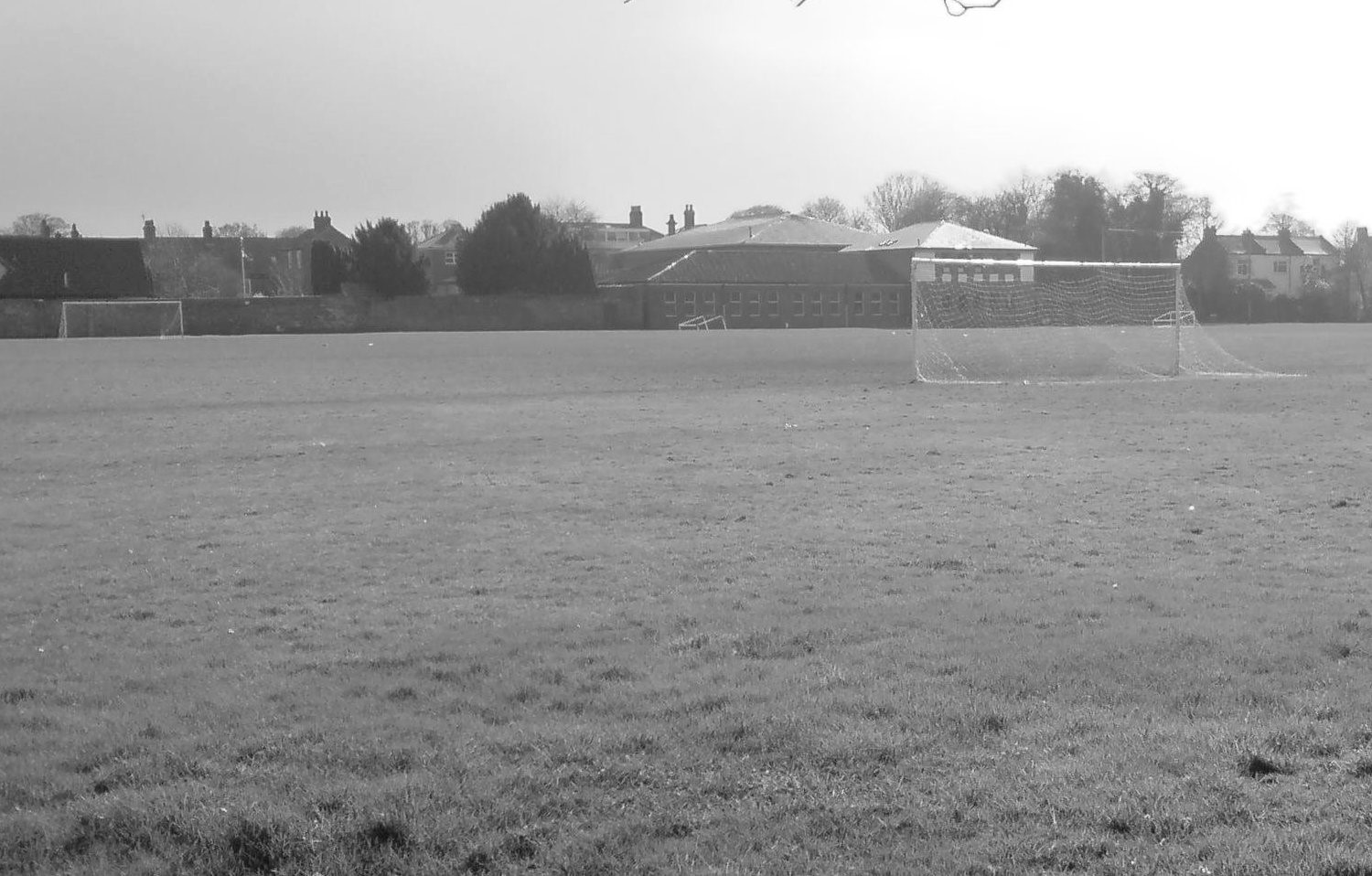
Red House School, Norton
Where it all started in late 1964
We used this field at the Red House School, Norton for practice to the annoyance of the headmaster. This arrangement was a little tentative though, because more often than not he came out and chased us off the school field. However, our persistence did pay off when one day the headmaster came out and asked, “why do you insist on using the school field?” We explained that we were organised and had formed a football team in Norton, but as yet had not acquired a pitch to play on and used the school field to keep out the way of the local riffraff. He must have been impressed because after hearing our plight, he allowed us to use the field subject to letting him know when we were arriving and leaving the school premises. In addition to that he kindly allowed us limited use of the main school pitch for the occasional home game.
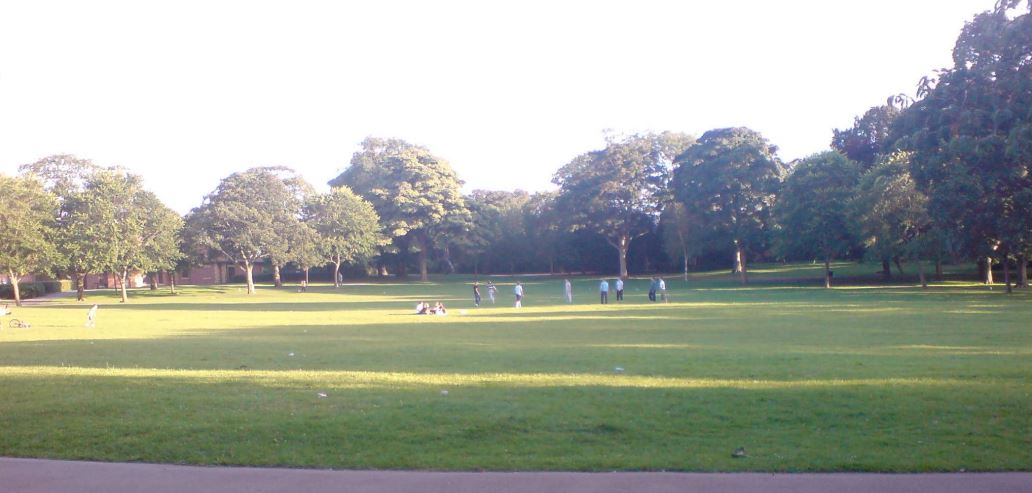
Ward Jackson Park, Hartlepool
Norton Albion’s first ever game was played here on 10 January 1965
Our first ever game was played in the above park at Hartlepool on 10 January 1965. We arrived by service bus and were greeted by one of the opposition who escorted us all the half mile or so from the bus stop to the ground. The ground was not what we had imagined; in fact it was the Ward Jackson Park, which is a very nice park with a large grassed area although on the day it was grey and murky. Asking, “where are we going to play the game”, our escort answered “here” and then he started to muster-up a number of bags and coats to use as goalposts and for marking out the pitch extremities. At this point we wondered what we had let ourselves in for, but decided it was better to go ahead and play rather than to face the wrath of the opposition. The game was played without a referee of course and we lost the game by six goals to seven although some of our players argued it should have been a draw because of an earlier disputed goal, which was decided by who could shout the loudest. The team fielded that day comprised Alan Green, Alan Race, Mick Hinnigan, Ged Waters, Ged Flanagan, Jimmy Raw, Vic Cooke, Rob Lake, and Malcolm McDonough. In truth this game was little more than a ‘kick about’ in the park by a few youngsters, but it was the start of something that was to continue for a long time.
Our next game, away to Easington Juniors was in total contrast to our first game. We arrived to find an enclosed ground on a former RAF site on a freshly marked-out pitch with goalposts, nets, corner flags, changing rooms and a referee. The opposition were well organised and looked like professionals in their all green kit. We had absolutely no chance whatsoever with the team we had available on the day and were thrashed 0–16 even with the players loaned to us for the day by the opposition.
We suffered a series of cricket score defeats in our first few games mainly due to the age difference and inexperience of our players compared to the opposition. We persevered however and by the end of our first season we did manage to win a few games against lesser opposition and were looking forward to the next season which couldn’t come soon enough for us.
We continued to arrange further friendly games in the 1965-1966 season, many against the teams we had played in the previous season. By now we had grown in stature and managed to attract some new players into the fold. With the influx of these new players, being a little older and having the experience of the previous season we were in a better position to compete. In October 1965, which was just nine months after we had been thrashed 0–16 by Easington Juniors, we managed to turn the tables and beat them handsomely by six clear goals at Easington. This game in particular demonstrated how far we had come in such a short time and inspired us to join the ranks of recognised junior football.
Under 18’s Stockton Junior Football League
In the autumn of 1965 having played almost a season of friendly games an application was made to join the under 18’s Stockton Junior Football League. We were welcomed with open arms albeit our application was not made until mid-October when the season had already started. Until then we had called ourselves Norton FC, but at the behest of the league secretary this was changed to Norton Albion so as not to conflict with other Norton teams. John Godfrey can take credit for the name Albion as it resulted from his quick thinking when prompted for a name to put on the top of the league application form. At this point we didn’t even have a ground to play on and our early fixtures were all played away from home until we acquired the use of Blue Hall Recreation Ground in Norton.
Many of the players at this time were unable to command a place in any recognised team and only one or two of our players were of the required standard needed for this league. We were hopelessly out of our depth and won only three games all season and these were against the bottom two clubs. To compete in this league, players generally needed to be eighteen years of age to have any chance of coping physically. The top teams in this league like the Police Cadets, Winterton Juniors and Billingham Synthonia Juniors rarely selected players that were under eighteen years of age.
We soldiered on and fulfilled our commitments and at the end of the season were commended by the League Secretary for doing so. This league was of a high standard and was the breeding ground for many Teesside and Northern League players.
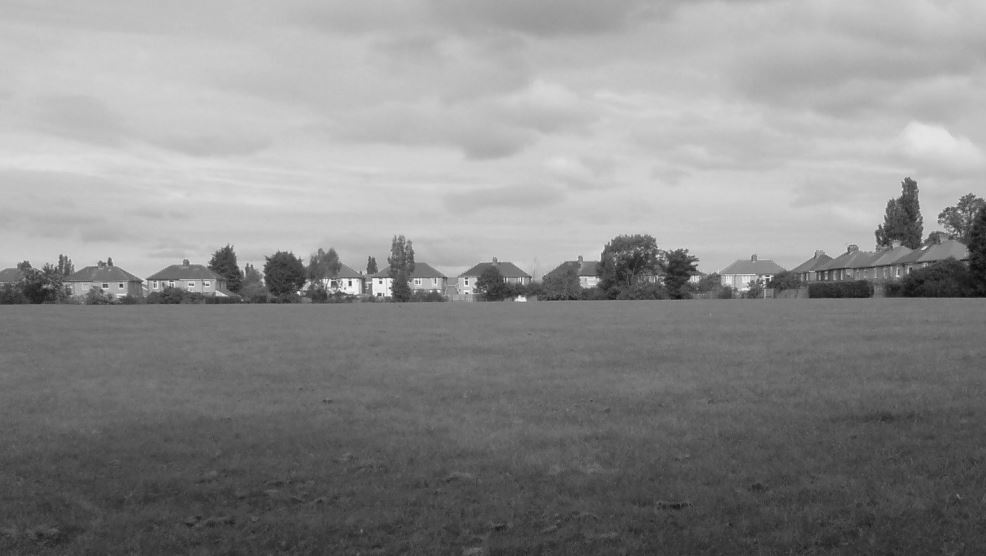
Blue Hall Recreation Ground, Norton
Norton Albion first played here on 18 December 1965
Blue Hall was our home ground from 1965 until about 1980. It had two pitches running east to west, the main one, which was generally flat and shown on the right hand side of the picture above. It also had a sloping pitch to the left, which had a concrete strip across its width, which is not visible above. The concrete strip, which ran across the width of the pitch, was for playing cricket during the summer months. During the winter months it was covered by turf and if my memory serves me right it never had much grass on it.
In our first season Wiggins FC had the flat pitch and we used the sloping one. Within a season or so of us starting to play at Blue Hall, Wiggins FC folded and we inherited the flat pitch for our use. The changing rooms were primitive, comprising one large open area in the middle and two small changing rooms at each end of the pavilion, which has since been demolished. More often than not we were crammed into one of the smaller rooms at the end when two matches were scheduled. There was only one sink, with cold water only, for washing at the end of a game and this was usually caked-up with mud by the time we got to use it. The hire of the pitch at Blue Hall Recreation Ground cost us two pounds ten shillings for the season, which is £2.50 in today’s money. Obviously, this must have only covered the cost of administration and the hire fee must have been free gratis.
Under 21’s Stockton Youth Organisations Committees League
At the end of our first season, the Stockton Junior League folded and we joined the under 21’s Stockton Youth Organisations Committees League. With a year’s league experience under our belts and a year older we were in a lot better position to compete and ended mid-table in our first season in the YOC League. Two further seasons were spent in this league culminating with narrowly missing out on the league title in 1968-69 season and having to make do with being awarded the Charles Raines Trophy for the runner-up spot.
The league title in 1968-1969 was a very close call indeed and ultimately hinged on one game against Tilery YC who were the eventual winners. In the two games played against them we lost the first 3–4 at Blue Hall after being 3–2 in front with only 5 minutes left to play. In the return game two weeks later it ended a 2–2 draw after another hard fought battle. The games against Tilery YC were generally hard fought, with fought being the operative word as some of the tackles and fouls committed were a little ‘choice’ to say the least. In a previous season against the same team Vic ‘Toots’ Cooke who was playing up front was being battered from pillar to post for most of the game and he just ‘took it in his stride’ and carried on playing. On the sidelines was Vic’s uncle who was incandescent with rage because of the treatment being dished out to his nephew and with the referee’s inability to keep control of the game. Unable to control himself anymore he was suddenly on the pitch, made a close-up verbal assault on the referee and was only inches away from a serious physical confrontation with one of the opposition players.
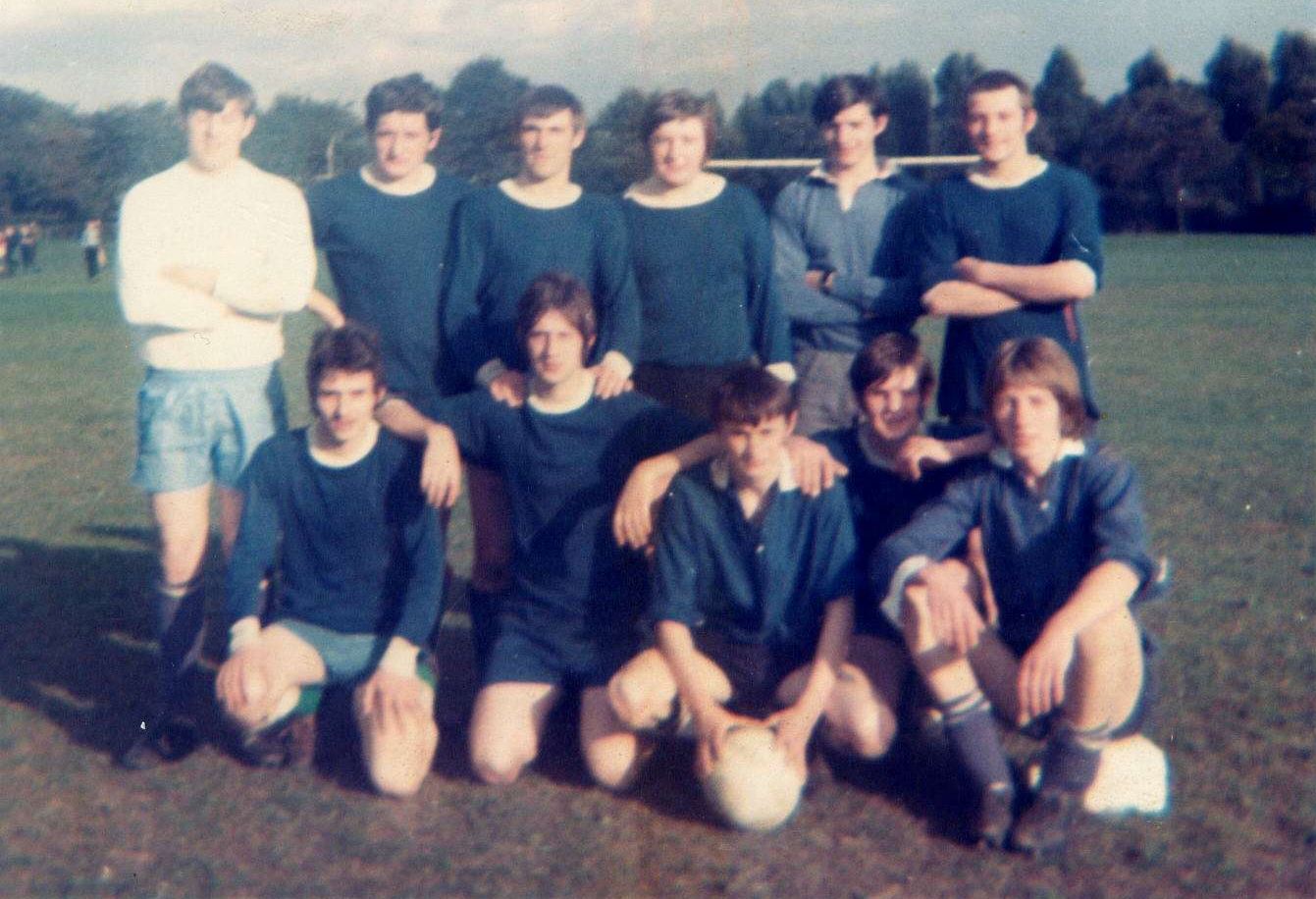
Norton Albion
Pictured at Blue Hall in 1968/69 Season
Stockton and District League
As with the Stockton Junior League in 1965-1966 season, the YOC League also folded after the 1968-69 season and Norton Albion joined the Stockton and District League where it remained for twenty years until disbanding in the 1987-1988 season. We applied to join the Stockton and District League in June 1969 and were accepted in time to play in the 1969-1970 season. This came as quite a relief because most members in our team were approaching the 21-year age limit imposed by the YOC League. We were proud to be members of this league and the standard was higher than what we had been used to previously, in particular the use of goal nets, which were compulsory for all games. Referees used in this league were of a higher standard than those in the YOC League and almost all games played were assigned an official. It comprised two divisions ‘A’ and ‘B’ and generally had about sixteen teams in each division. We made an impressive start in our inaugural season in the Stockton and District ‘B’ Division in the 1969-1970 season by winning six of our first eight league games. We ended up mid-table by the end of the season and had adjusted well from playing in the YOC League the season before. We played another season in the ‘B’ division before being promoted to the ‘A’ division where we stayed for the rest of the decade. We were relegated in the 1979-1980 season and played the rest of our time in the ‘B’ Division.
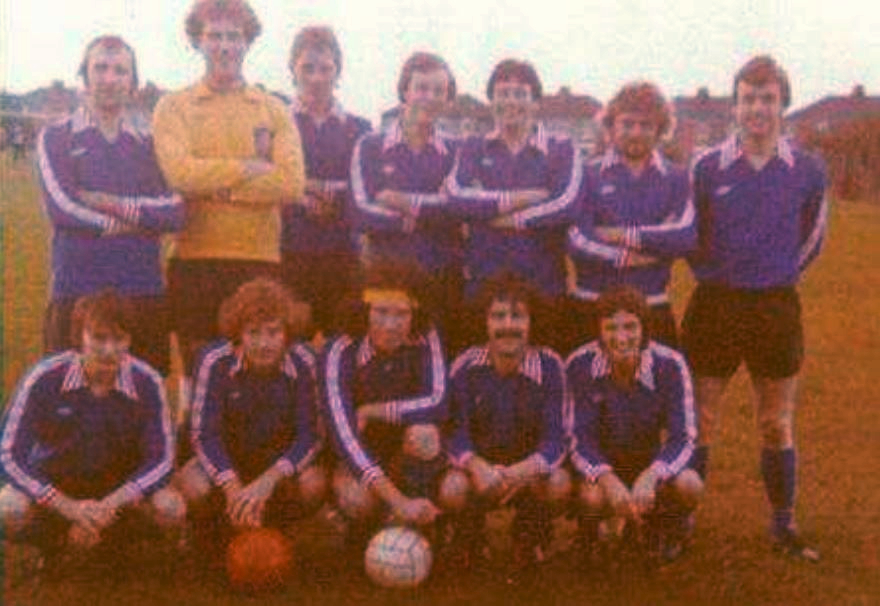
Norton Albion
Pictured at Blue Hall circa 1976
The 1972-1973 season playing in the Stockton and District League ‘A’ Division was probably one of our most successful and enjoyable seasons. At the halfway stage in the season we were the first team in the league to score 50 goals and were lying in second place, just three points from top. Alfie Jackson at this point had scored twenty three goals with five hat tricks to his name and went on to score a further 12 goals bringing his total to 35 for the season. We were buoyant at this time with the bulk of our players at their peak, being in their early-twenties with the exception of veteran Tom Newbold who was in his early thirties and was a class player that had previously played in the Northern League.
One game of note that always springs to mind was a night match against Billingham Social (now Billingham Town FC playing in the Northern League) in the 1972-73 season at Bedford Terrace. With only three games to go they remained unbeaten all season and were keen to keep this record in tact. On the night we didn’t expect to win or even draw the game and knew that we were in for a hard fought battle on a bone dry pitch. We played well that night and although a goal down at half time, equalised mid-way through the second half with a goal from Alfie Jackson. This set-up a grandstand finish with Ian Hayley heading in the winner with about ten minutes or so left to play. We defended resolutely after that goal marshalled by Charlie Blakemore who had a wonderful understanding of how to use the offside rule to our advantage. Ian Hayley is still proud of his goal to this day even if it did cost him a broken nose at the time.
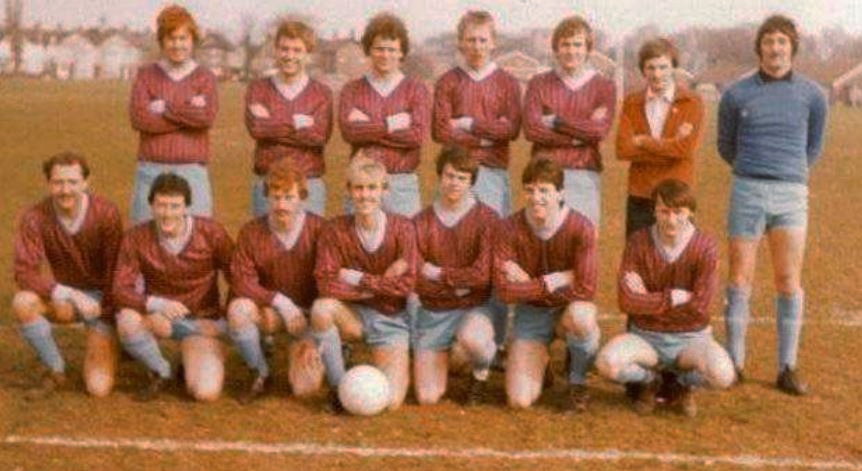
Norton Albion
Pictured at Blue Hall circa 1976
Pat Walker took on the role of secretary from the 1974-1975 season and continued to run the team until the end of the 1978-1979 season. This was a difficult period for Norton Albion, as nobody else wanted to take on the role of secretary; and team members were reluctant for this role to be given to anybody that didn’t understand the teams ethos. In retrospect, we were very lucky that Pat accepted this role, because if he hadn’t, it was very likely that the team would have folded.
In the early 1980’s many of the original team, now about thirty years of age or slightly older, had stopped playing for various reasons and the team needed a new lease of life. Rob Lake took on the role of secretary and moved our home ground from Blue Hall to the William Newton Further Education Centre in Norton. This offered comparative luxury compared to what we had been used to and had an enclosed flat pitch, separate heated changing rooms for home and away teams with showers. Most importantly, it brought renewed enthusiasm and attracted new players, which kept us going until almost the end of the eighties decade. Rob managed to organise the teams finances by weekly subscriptions from the players, organise and take training, get new kit with help from sponsors and even took the muddy kit home after each game for his wife Marie to wash and iron in time for the next game.
Recognition must go to Paul Johnson for being Norton Albion’s all time most prolific goalscorer. He played two full seasons scoring 43 goals in the 1983-1984 season and 60 goals in the 1986- 1987 season. This was a remarkable achievement when put in the context that he scored 43 of the team’s 101 goals in the 1983-1984 season and 60 of the team’s 136 goals in the 1986-1987 season. What made this even more remarkable is that he was short-sighted and often played wearing retro-style national health type glasses, kept in place by elastic bands fastened tightly around the back of his head.
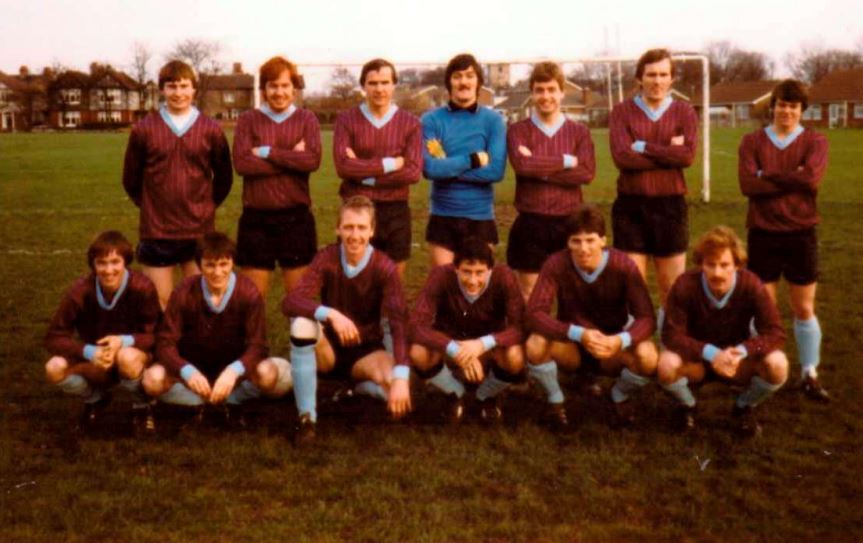
Norton Albion
Pictured at William Newton circa 1982
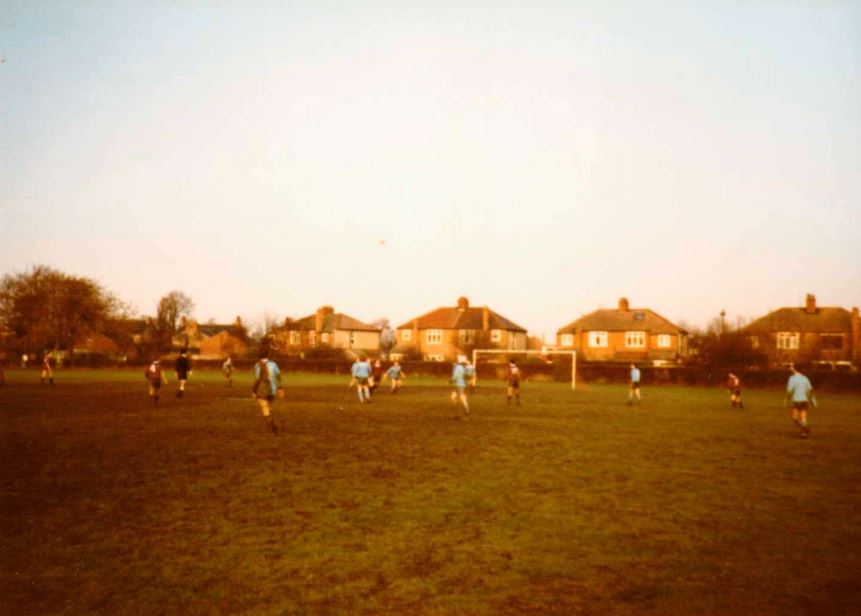
Hardwick Falcon v Norton Albion
Newham Grange Park circa 1982
We were sponsored by Davy in the mid-to late 1970’s and played under the name of Davy Social. This sponsorship did not affect the way in which the team was run and introduced some new players into the fold. Other than providing some initial funding for new kit, there was little incentive for us to use the name Davy Social and we reverted back to Norton Albion after approximately three years. We never won any silverware in this league, but reached three separate cup semi-finals, twice in the League Cup and once in the Charity Cup. The 1987-88 season was the last played under the name of Norton Albion. Rob Lake took on the stewardship of Norton Legends, which was a team sponsored by a local wine bar on Norton Road in the 1988-89 Season. They also played in the Stockton and District League ‘B’ division and used William Newton as their home ground. A number of ex Norton Albion players that had decided to keep on playing joined Rob and played on into another season.
In Conclusion
The running and organisation of the team was the responsibility of the appointed secretary. This role encompassed everything from picking the team to locking the dressing room door when everybody had gone home after the game. The most difficult part of this role was not so much the list of duties that it entailed, but dealing with the contentious issues around team selection. Four people had the role of secretary starting with Ged Flanagan from 1965 till 1973, Ged Waters from 1973 till 1974, Pat Walker from 1974 till 1979 and last of all Rob Lake from 1979 till 1988. Each ran things in their own way, but generally were happy just to let things tick over and keep things as simple as possible. The team’s philosophy, certainly in the early years, was different from many of our competitors because it was run for the benefit of its members and not solely on their ability to play football.
During its twenty-five year history Norton Albion had only limited success in terms of trophies, but brought a lot of enjoyment to a lot of people. It was never the domain of the so-called ‘pot hunter’, but it did have a number of individual players over the years that were excellent on their day at local league level.
Special mention must go to Rob Lake and Ged Waters for their services to Norton Albion. Rob was an exceptional left-sided player that signed professional forms for Middlesbrough and Hartlepool as a youth player. Ged was an excellent centre half with wonderful heading abilities and was the backbone of the team from the very first till the very last game played. Both Rob and Ged could have played at a higher level, but chose to play with friends and enjoy football for the pleasure it brought to them.